24 August 2026
EC ¦ FAQs Sanctions Russia: Infrastructure Transaction Ban
A wide-ranging restriction on infrastructure transactions
Article 5ae of Council Regulation 833/2014 prohibits EU operators from engaging directly or indirectly in transactions with designated ports, locks, airports and refineries. The relevant infrastructure is listed in Annex XLVII.
The measure applies to ports and locks in Russia listed in Parts A and B, to specified ports and locks in third countries listed in Part C, and, following the 2026 amendment, to refineries listed in Part D. The targeted facilities are considered relevant to Russian military supply chains, unsafe shipping practices, sanctions circumvention or the processing of Russian crude oil and petroleum products.
The prohibition extends beyond the transfer of restricted goods. It may cover services, goods, software, technical assistance, training, consultancy, construction, maintenance, cargo handling, berthing and operational supplies. Even a payment for loading cargo may qualify as a transaction where the payment is made for the service provided by the listed infrastructure.
For financial crime purposes, this breadth is important. A transaction may appear to be an ordinary logistics, shipping, technology or energy payment while economically supporting a prohibited facility.
What changed on 24 August 2026
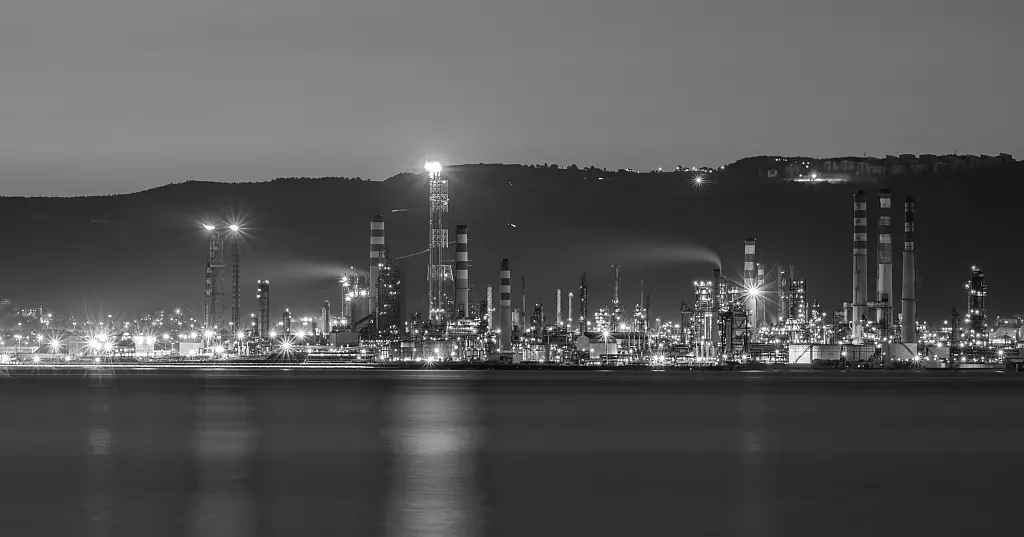
The update of 24 August 2026 highlights the introduction of a new category of designated infrastructure: refineries.
Regulation (EU) 2026/1848 of 23 July 2026 introduced a transaction ban for refineries in Russia and in third countries that are used to process or refine Russian crude oil, process or blend petroleum products from Russia, or facilitate the circumvention of EU sanctions. The facilities concerned are listed in Part D of Annex XLVII.
This means that EU operators must assess refinery relationships under the same direct and indirect transaction principles that apply to designated ports, locks and airports. The restriction is not limited to purchasing refined products. It may affect operational services, software, construction, maintenance, consulting, technical support and other commercial activity involving a listed refinery.
The update also confirms a transitional arrangement for the Kulevi Oil Refinery in Georgia. The application of the transaction ban has been postponed for six months, until 25 January 2027. During this period, transactions with Kulevi are not prohibited under Article 5ae solely because of its listing. The postponement is intended to allow the refinery to diversify away from Russian crude oil.
The postponement does not suspend other EU restrictive measures. Union operators must continue to comply with all applicable sanctions, including rules governing Russian crude oil, petroleum products, ownership, trade restrictions and circumvention. Following an assessment by the Commission, the Council will decide whether the listing should remain in place.

Why refinery listings increase money laundering risk
Refineries can transform the commercial appearance of Russian-origin commodities. Crude oil may be routed through a third country, processed or blended, and then sold with documentation that gives the product a different declared origin or ownership profile.
This creates a significant risk of trade-based money laundering and sanctions evasion. Criminal networks may use false certificates of origin, shell companies, opaque trading structures, manipulated invoices or complex shipping routes to conceal the source of the goods and the beneficiaries of the transaction.
A refinery transaction may also form part of the laundering of proceeds generated by sanctions evasion. The underlying conduct may constitute a predicate offence under applicable national law, depending on the intent, the relevant criminal provisions and the facts of the case. Once generated, the proceeds may be moved through commodity traders, banks, insurance companies, logistics providers or unrelated commercial accounts.
Financial institutions should therefore examine the source of crude oil, the refinery’s role, the ownership of the cargo, blending arrangements, transport routes, storage facilities, intermediaries and final purchasers. A third-country location does not by itself eliminate the sanctions or money laundering risk.
The scope of transactions with listed ports, locks and airports
Transactions typically covered by Article 5ae include the activities needed to operate or use the listed infrastructure. Examples include payment of berthing fees, port charges, loading fees and payments for supplies or services necessary to keep the facility operational.
The restriction may also apply to the provision of air traffic control software, training or consultancy concerning passenger and cargo management, and construction or maintenance of port or airport facilities. These examples are not exhaustive.
The ban applies regardless of the legal ownership of the infrastructure as a whole or of individual parts of a port or airport. The relevant question is whether the transaction concerns or supports the listed facility.
This creates exposure for businesses that may not consider themselves part of the sanctioned activity. Software vendors, engineering firms, inspection companies, ship managers, freight forwarders and financial institutions may all become involved in transactions connected with listed infrastructure.
Russian goods that are not otherwise banned
Article 5ae is broader than existing import and export prohibitions. As a result, the fact that a Russian-origin product is not subject to an import ban does not automatically mean that it may pass through a listed port or lock.
In principle, EU operators cannot engage in transactions involving listed infrastructure unless the product or activity falls within an express exemption. Other Russian ports that are not listed in Annex XLVII may be used for transit to a third country or for import into the Union where no separate import restriction applies.
This distinction is important for compliance teams. Product permissibility and infrastructure permissibility are separate questions. A lawful product can still be involved in an unlawful transaction if the chosen listed facility is not covered by an exemption.
Coal, fertilisers and global food and energy security
The regulation contains exemptions intended to prevent sanctions from disrupting legitimate trade, food security and energy security in third countries.
EU operators may transport Russian coal to a third country where the activity is permitted to protect global energy security. However, they may not engage in transactions with a listed port or lock for that purpose. The shipment must be diverted to a non-listed port.
Listed ports and locks may be used for transporting coal originating in a third country, such as Kazakhstan, to the Union or to another third country. Third-country coal is not subject to the same restriction merely because it passes through Russian infrastructure, provided the applicable conditions are satisfied.
Fertilisers are also covered by an exemption where their purchase, import or transport is permitted under Regulation 833/2014. Most fertilisers are not subject to restrictive measures because of global food security concerns, although certain products, including potassium chloride, may be subject to import quotas.
The exemption may also cover raw materials or components such as sulphur where they are used as fertilisers or to produce fertilisers. The transaction must not be prohibited by another provision of the Regulation.
These exemptions are particularly vulnerable to abuse. False declarations about origin, ownership, product classification or end use may be used to bring prohibited transactions within the appearance of permitted trade. Such conduct may be relevant to both sanctions enforcement and the identification of predicate offences.
Other exempted goods and activities
Article 5ae provides exemptions for transactions necessary for the purchase, import or transport of specified commodities, including natural gas, titanium, aluminium, copper, nickel, palladium and iron ore from or through Russia into the Union, the European Economic Area, Switzerland or the Western Balkans, subject to the applicable provisions.
Certain transactions involving oil, including refined petroleum products, may also be exempted where they comply with Regulation 833/2014. The exemptions operate alongside Articles 3m and 3n, which impose important restrictions on Russian oil and petroleum products. Compliance with the Oil Price Cap rules remains essential.
Additional exemptions concern the purchase, import or transfer of seaborne crude oil and petroleum products originating in third countries, provided that the goods are non-Russian in origin and ownership. Transactions connected with the operation and safety of civil nuclear capabilities may also qualify.
An exemption does not remove the need to check ownership, routing, pricing, documentation and the involvement of sanctioned persons. It only addresses the specific transaction covered by the relevant provision.
Territorial and personal scope
EU sanctions are not generally extraterritorial. Article 13 of Regulation 833/2014 defines the persons and entities required to comply.
The Regulation applies to persons within the territory of the Union, EU nationals inside or outside the Union, natural persons residing in a Member State, and legal persons, entities or bodies incorporated or constituted under the law of a Member State, wherever they operate.
A transaction outside the Union between a third-country national or entity and a listed Russian port or airport does not fall within the scope of EU sanctions solely because the listed facility is involved. The analysis changes where an EU national, EU-established entity, EU-incorporated company or EU-flagged vessel participates in the transaction.
EU-flagged vessels are subject to the prohibition concerning listed ports and locks in Part A of Annex XLVII, regardless of the nationality of the crew or the vessel’s actual ownership. The flag state has responsibility for exercising jurisdiction and control over ships flying its flag, including compliance with applicable sanctions.
Vessel services and the meaning of indirect involvement
The provision of services to a vessel that has called at a listed port is not automatically a direct or indirect transaction with the port. Services such as insurance, bunkering, loading and unloading may therefore be permissible where they are provided to the vessel rather than to the listed infrastructure.
The position is different for an EU-flagged vessel that calls at a listed port. The call itself may constitute a prohibited transaction, including through the payment of anchoring fees, port charges or similar amounts, unless an exemption applies. Emergency port calls and certain forms of legitimate trade may fall within an exemption.
Crew members generally do not engage directly or indirectly in transactions with the port merely by working on a vessel that calls there. Seafarers typically do not pay fees to port authorities or make operational decisions that create the prohibited relationship.
For banks and other obliged entities, the distinction should be assessed on the facts. The identity of the payer, the recipient, the contractual beneficiary, the decision-maker and the purpose of the service may all be relevant.
Importing non-sanctioned goods through a listed port
An EU importer of non-sanctioned Russian goods does not necessarily engage in an indirect transaction with a listed port if a transport company chooses the port without the importer’s involvement.
The importer is less likely to be treated as engaging indirectly where it did not select or influence the port and did not pay port fees to the authorities. A direct payment to the port is a direct transaction. Involvement in the decision to use the specific port may constitute an indirect transaction even where the importer does not make the payment itself.
A subsequent commercial relationship between one EU company and another does not automatically create an indirect transaction with the listed port merely because the first company was involved in a prohibited transaction. The facts and the structure of the second company’s involvement must be examined separately.
These rules show why transaction monitoring should not rely exclusively on beneficiary screening. Operational control and payment responsibility may be more significant than the immediate contractual relationship.
Reporting within two weeks
EU operators must notify the competent authority of the Member State in which they are incorporated or constituted of transactions concluded under the exemptions in Article 5ae, generally within two weeks of conclusion.
The operator engaging in the transaction is normally responsible for reporting. This may include a vessel management company whose vessel loads permitted cargo at a listed port or an airline whose aircraft makes an emergency landing at a listed airport.
An EU importer of non-sanctioned Russian goods does not need to report merely because the transport company used a listed port, provided the importer did not engage directly or indirectly with that port. If the importer selected the port, influenced that decision or paid port fees, the reporting obligation may arise.
From an AML perspective, reporting records can provide important evidence of the customer’s understanding of the transaction. Delayed notifications, missing reports or discrepancies between regulatory filings and payment records may indicate weak controls or deliberate concealment.
Predicate offences and the laundering of proceeds
The infrastructure ban should be analysed together with the predicate offence framework under national law. Potential underlying offences may include intentional sanctions violations, sanctions circumvention, customs fraud, document fraud, false declarations of origin, corruption and participation in an organised scheme.
A prohibited payment to a port, airport or refinery may be the direct object of the offence, but it may also be one step in a larger criminal process. For example, a company may use a shell entity to pay a listed refinery, sell the processed product through a third-country trader and transfer the resulting proceeds through several bank accounts.
The laundering activity may involve placement, layering or integration. Funds may enter the financial system through trade payments, be moved between related companies and then be used to acquire assets or finance apparently legitimate business. The original sanctions breach may be difficult to detect unless the institution connects transaction data with shipping, commodity and ownership information.
A risk-based investigation should therefore ask whether the funds represent the proceeds of unlawful conduct, whether the transaction facilitated the predicate offence, and whether the parties attempted to disguise the origin, ownership or destination of the goods or funds.
Compliance priorities following the 24 August update
The 24 August 2026 update requires particular attention to refinery exposure. Screening should cover the facilities listed in Part D of Annex XLVII, together with their owners, operators, contractors, suppliers, brokers, vessels and financial intermediaries.
Customer due diligence should identify the source and ownership of crude oil and petroleum products, the refinery or processing facility involved, the use of blending, the route from origin to destination and the reason for any third-country intermediary. Documentation should be tested against independent shipping and trade data wherever possible.
Monitoring should identify payments for port access, berthing, cargo handling, airport services, refinery operations, technical assistance, vessel management and energy trading. Alerts should be prioritised where there are unexplained route changes, new intermediaries, unusual pricing, inconsistent product descriptions, false or incomplete origin documents, or payment instructions that do not match the commercial transaction.
Kulevi-related transactions require a separate but careful assessment. The Article 5ae ban is postponed until 25 January 2027, but Russian crude exposure and other restrictive measures remain relevant. The transitional period should not be treated as a reason to reduce due diligence.
Conclusion
Article 5ae establishes a broad prohibition covering transactions with designated ports, locks, airports and, following the 2026 amendment, refineries. The update published on 24 August 2026 is especially important because it brings Russian-linked refining and blending activity in third countries into the infrastructure transaction framework.
The temporary postponement for Kulevi Oil Refinery until 25 January 2027 provides limited relief under Article 5ae, not a general exemption from EU sanctions. Other restrictions continue to apply.
For financial crime professionals, the principal concern is the interaction between sanctions evasion, trade-based money laundering and predicate offences. Permitted trade exemptions protect food, energy and legitimate commercial activity, but they also require detailed verification. The decisive issue is whether the transaction genuinely falls within an exemption or whether the exemption is being used to conceal prohibited infrastructure, Russian ownership, unlawful routing or the movement of criminal proceeds.
Dive deeper
- European Commission (EC) ¦ Infrastructure transaction ban, FAQs on sanctions against Russia and Belarus, with focus on the following provision: Article 5ae of Council Regulation (EU) No 833/2014. ¦ Link

EU Sanctions Helpdesk
 The EU Sanctions Helpdesk platform supports European operators in complying with European Union restrictive measures (also known as sanctions) imposed worldwide.
Aimed primarily at Small and Medium-sized Enterprises (SMEs), the Helpdesk offers resources and personalised help to companies performing sanctions due diligence checks.
The EU Sanctions Helpdesk platform supports European operators in complying with European Union restrictive measures (also known as sanctions) imposed worldwide.
Aimed primarily at Small and Medium-sized Enterprises (SMEs), the Helpdesk offers resources and personalised help to companies performing sanctions due diligence checks.